
My junior year of college, I spent fall semester in Barcelona and spring semester on Semester at Sea. For those trying to decide whether Semester at Sea is better than a “traditional” study abroad program, I will break down my two experiences.
- Cost
- Ship Life vs. City Life
- Ports vs. Weekend Trips
- Making Friends and the Social Scene
- But Lucy, which program is better??
Cost
While Semester at Sea initially appeared to be more expensive, my grand totals were pretty close with my personal expenses factored in.
With the cheapest room on the ship costing over $30k, Semester at Sea’s tuition is steeper than the average study abroad program. As for scholarships, I personally received more money from my home university than Semester at Sea. Some schools have partnerships with Semester at Sea, so be sure to check your university’s policy about applying your existing financial aid and scholarships to your Semester at Sea tuition.
My living and travel expenses were much greater during my semester in Barcelona than on Semester at Sea. A portion of that was food, as meals are included on Semester at Sea, but the main culprit was my weekend travels. While the ship transports students to ports on Semester at Sea, the typical study abroad student is paying their own air fare to visit other destinations. Additionally, you have the option of sleeping on the ship in port to save money on accommodations.
Ship Life vs. City Life
As much as the MV World Odyssey felt like home, living in Barcelona or another study abroad destination is undeniably better.
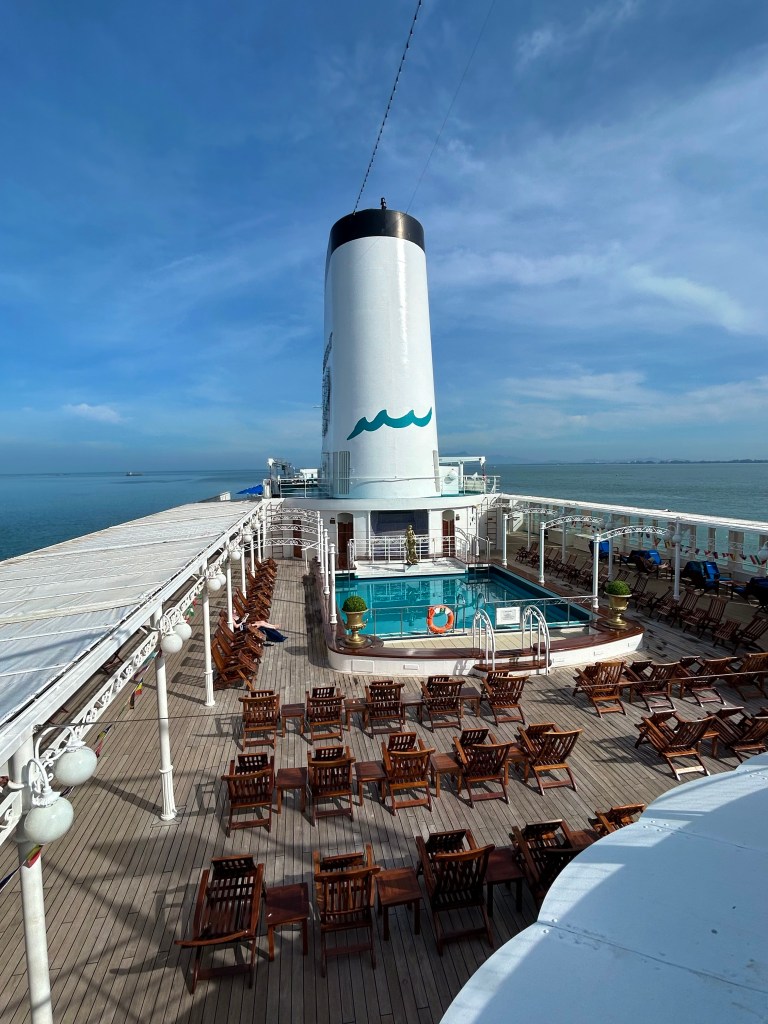
SASers always find ways to entertain ourselves with the ship’s limited resources. Every voyage has ship-wide events including the Sea Olympics and Neptune Day, and students will organize activities like line dancing or sunrise yoga. However, most of my time was spent sitting by the pool and reading (when I was able to snag one of the chairs on the overcrowded pool deck).
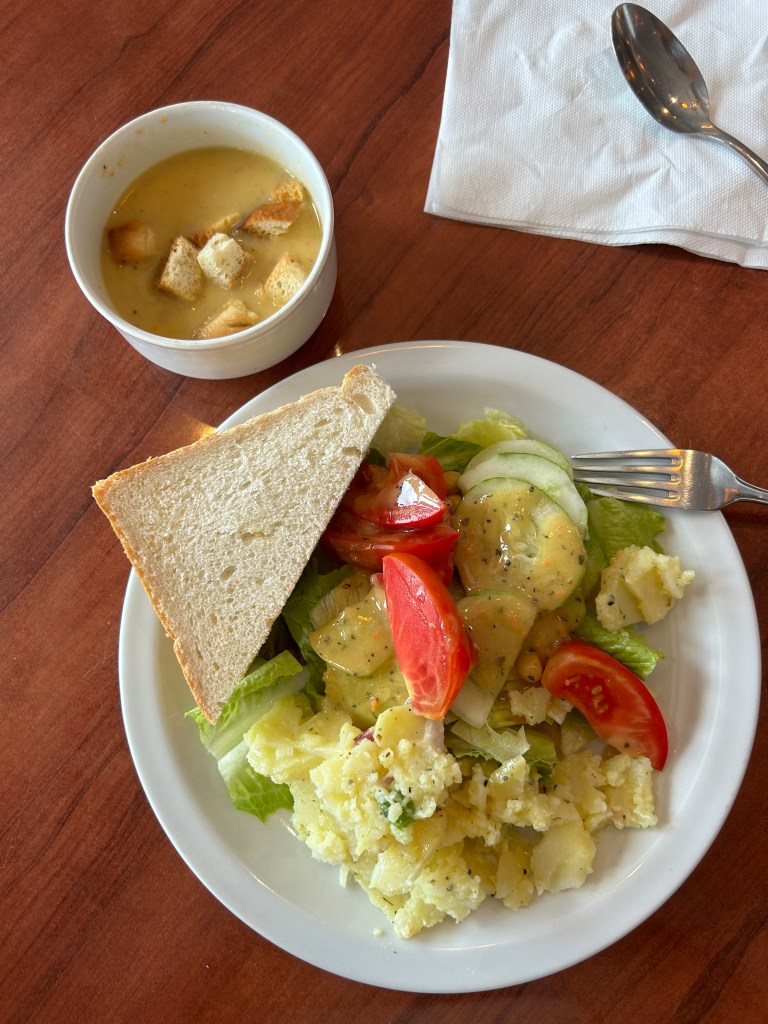
Students only get 100 MB of wifi a day on the ship, and it is expensive to buy more. There are not a lot of options at meals, and the food is repetitive. Students are not allowed to bring alcohol on the ship, though we occasionally have “drink nights” where we have a punch sheet for only two drinks. (Yes, they will search your bags every time you board the ship.)

The rooms on the ship are called cabins. I had an inside double, and I think it was one of the smallest rooms on the ship. There are also outside triples and doubles on the MV World Odyssey. Every cabin has a private bathroom. The cabins are cleaned every two days, including replacing the bedding and bath towels. There’s even a cheap laundry service that will deliver the folded clothes to your cabin door.
Ship life is blissfully simple, and it was really fun to live in one place with all my friends. I loved working out at the outdoor gym and reading outside on the deck. I never got sick of looking at the ocean, and the waves rocked me to sleep at night. You can roll out of bed and stumble to class in five minutes wearing your sweatpants and slippers.
(Read more about ship life and the reality of Semester at Sea.)

While I absolutely loved having the ocean as my backyard, it cannot compare to the rich experience of finding home in a foreign city. In a traditional study abroad program, you are immersed your destination’s culture, and you might attend class with the local college students. I celebrated Catalan holidays and attended Barcelona’s official Christmas lighting. I cried when a server at my favorite restaurant said, “See you next time!” on my last night in Barcelona. I still crave the pastries I would get at my neighborhood bakery on my morning walk to school. The 4-6 days I spent in port countries barely scratched the surface of the deep connection I felt to Barcelona.
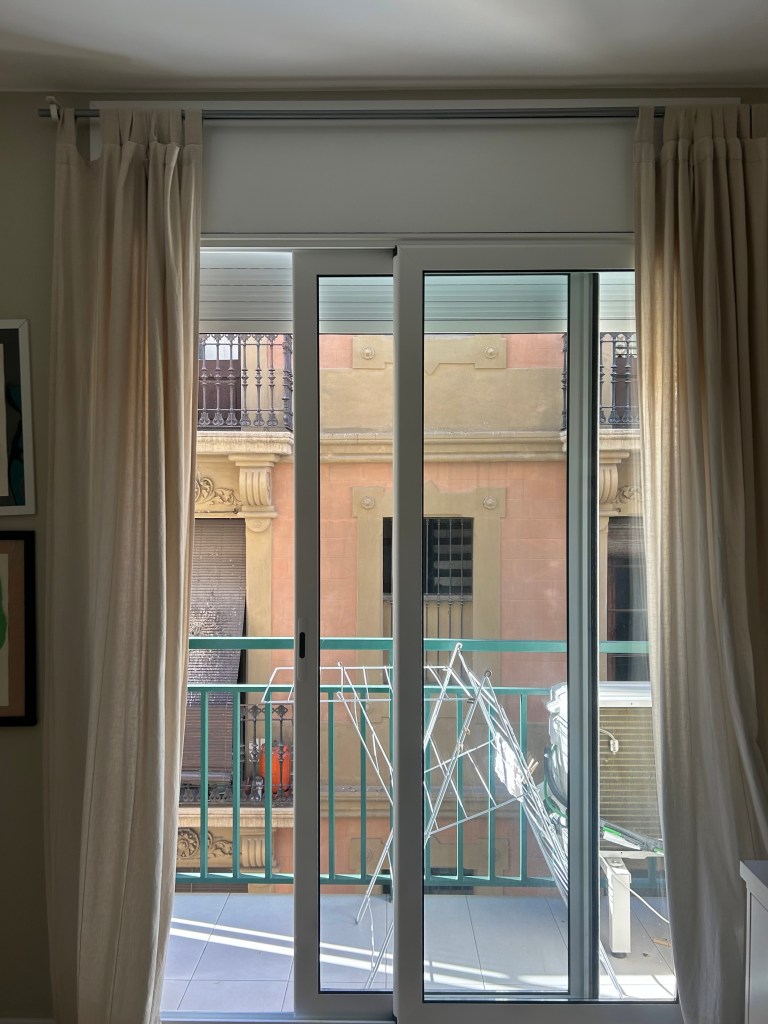

In Barcelona, I lived in an apartment with a private bedroom, and I cooked my own meals in my kitchen. I was free to explore the city and go clubbing on school nights. It was way more fun than living on a ship.
Ports vs. Weekend Trips
Semester at Sea voyages visit approximately ten port countries for 4-6 days each. In many “traditional” study abroad programs, students take weekend trips to nearby cities. In Barcelona, I did not have class on Fridays, so I could fly out as early as Thursday evening and spend 2-3 days in my destination. I visited six European countries as well as nearby cities in Spain. Some programs give students a holiday or break, allowing a full week off to travel. And you can always travel before or after your semester. My Semester at Sea voyage ended in Europe, and some students went backpacking for weeks afterward into the summer.
Semester at Sea takes students to more countries for longer stretches of time than a traditional program allows. However, students on Semester at Sea have no say over the port destinations, and traveling to additional countries is not allowed. Mount Kilimanjaro was just over the border from our port country Kenya, but I could only gaze wistfully toward Tanzania. In Barcelona, I could choose where I went and when. I attended the Oktoberfest festival in Munich and drank Butterbeer in London at Christmastime.


Of course, there is something really special about visiting unexpected places on Semester at Sea! Ghana was never on my travel radar, but it ended up being one of my favorite ports. Semester at Sea also creates field programs offering unique experiences that would be difficult to access on your own. Field programs make travel easier for those who are nervous to explore a new place or just don’t want to plan the logistics.


Making Friends and the Social Scene
I cannot emphasize enough how easy it is to make friends on Semester at Sea. With 400+ college students living on a relatively small ship together, it feels like a freshman dorm. Students are even organized into “seas” that each have their own resident director, similar to programs implemented in many colleges’ freshman dorms. (And we compete against each other in the Sea Olympics.) I also found that people on Semester at Sea were less likely to bring preexisting relationships to the program, so they were more eager to meet new people. In a traditional study abroad program, many people enroll with peers from their home school.
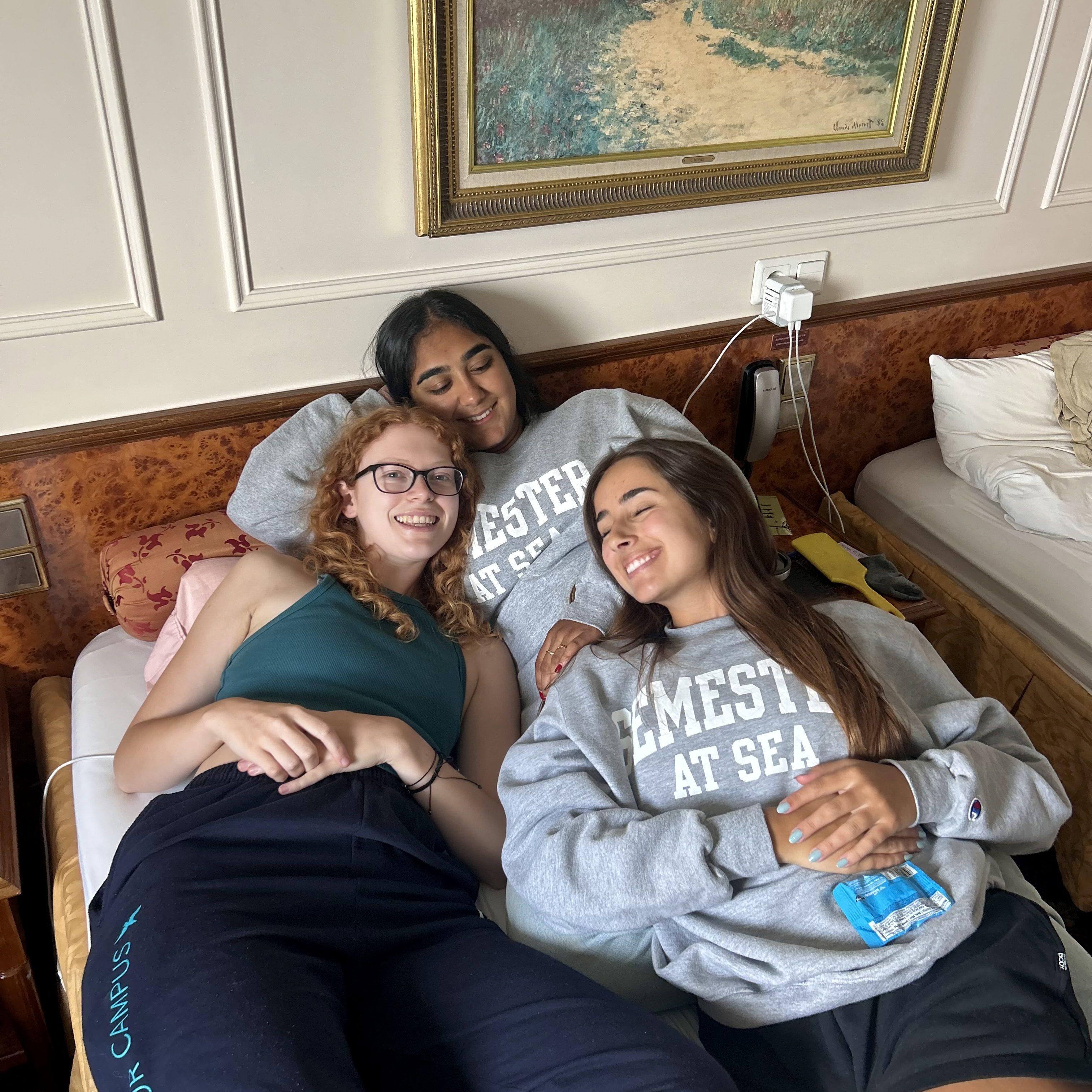
SASers develop a unique sense of community on the ship that you can’t find anywhere else. However, that is not to say everyone got along on the ship. The rumors are true—most SASers are privileged white kids. I would say there is a higher concentration of showboating and racism on Semester at Sea than the average sample of college students. (You would think that students in a multi-country study abroad program would be culturally competent, right? Wrong.) However, there are still lots of good people on Semester at Sea, and you can find a sub-community that will support you. Students create clubs and organizations at the beginning of the semester, which on my voyage included organizations for minority groups, the LGBTQ+, and international students. Don’t let the mean kids deter you from going on Semester at Sea.
The shared experiences in a study abroad program, good and bad, will bond you for life. (Especially the bad, like getting seasick or sleeping in the airport together.)

But Lucy, which program is better??
That’s like asking me to choose between my two cats. I loved both of them, and I honestly could not choose a favorite. I know a lot of Semester at Sea alumni act like we’re in like a cult and preach it as the best study abroad program, but most of them did not actually do another study abroad. There are no bad options, but hopefully my comparison helps you decide which option is the best fit for you.
 Latitudes with Lucy