
I spent two summers working in Glacier National Park, and I’ve helped countless park guests check bear and moose sightings off their bucket lists. Wildlife activity changes every season, so the best way to get update-to-date information is by asking a park employee, whether it’s a national park ranger or your server at breakfast. However, I still have a few general suggestions for finding Glacier’s most renowned animals.
Bears
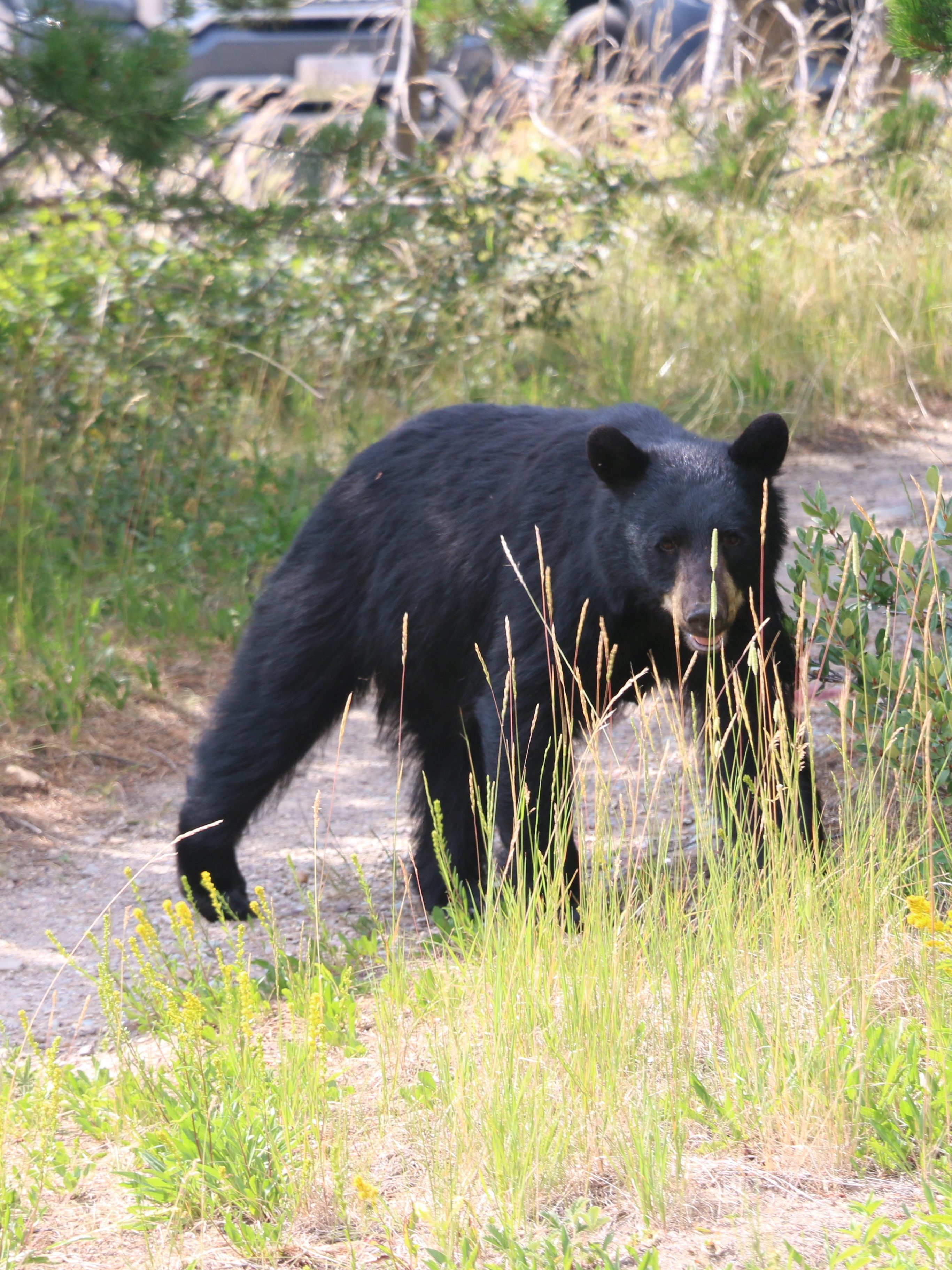
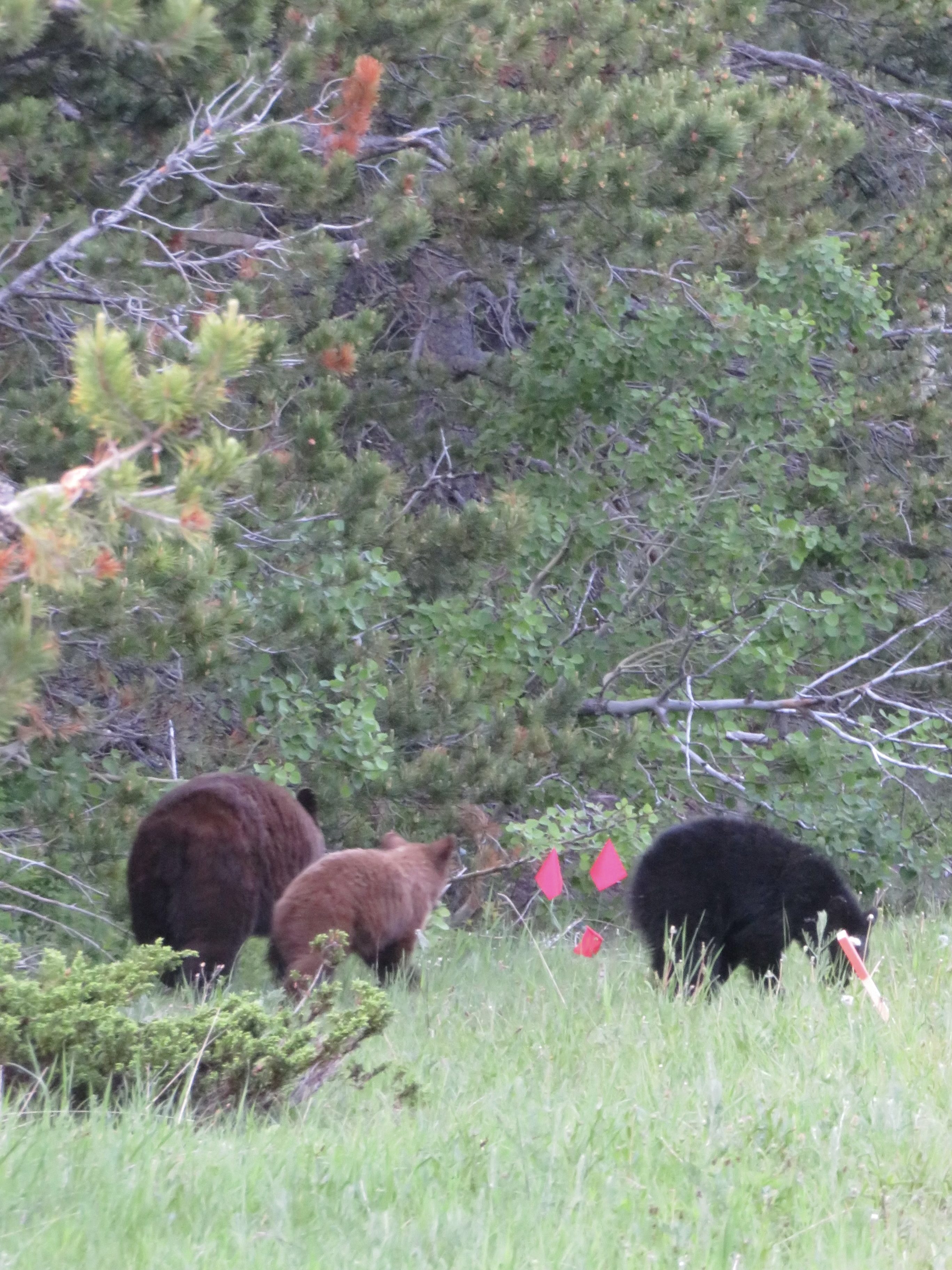
Left: Black bear at Many Glacier Hotel parking area courtesy of Aaron Wilkinson @the_big_lifestyle on Instagram. Right: Three black bears on the roadside near Many Glacier Campground.
Bears are most active at dusk and dawn. The easiest way to spot a bear is by taking a drive through the park at sunrise or sunset. I have frequently seen bears while driving the Going-to-the-Sun-Road alongside Saint Mary Lake or on the road into Many Glacier alongside Lake Sherburne. (Of course, living in Many Glacier means I was in the East side of the park far more often than the West.) On a boat tour with Glacier Park Boat Company, we spotted a bear on the mountainside above Lake Josephine. The guide told me that bears tend to hang out in avalanche chutes where berry bushes grow plentiful, and they saw bears daily on the Many Glacier boat tour that summer.
Moose
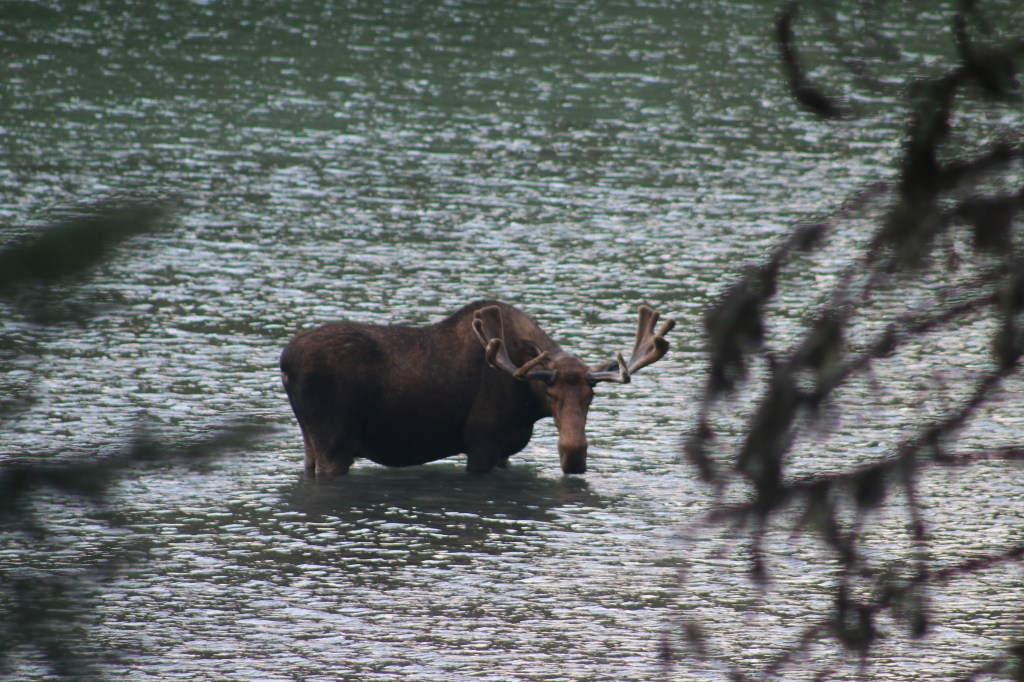
Moose swimming in Swiftcurrent Lake courtesy of Aaron Wilkinson @the_big_lifestyle on Instagram.
Moose, like bears, are most active at dusk and dawn. Moose generally hang out around lakes and marshy areas. By far the most popular lake to spot moose is Fishercap Lake, which is hardly a half-mile stroll from the Swiftcurrent Pass trailhead. If Fishercap comes up empty, you could continue down the trail to Red Rock and Bullhead Lakes. Moose are also frequently spotted by hikers in the Two Medicine region of the park. However, you don’t necessarily need to hit the trails to spot a moose. Visitors to Many Glacier Hotel often spot moose on the shore of Swiftcurrent Lake. Grab a cocktail at the Swiss Lounge, and watch sunset on the balcony overlooking the lake.
Bighorn Sheep
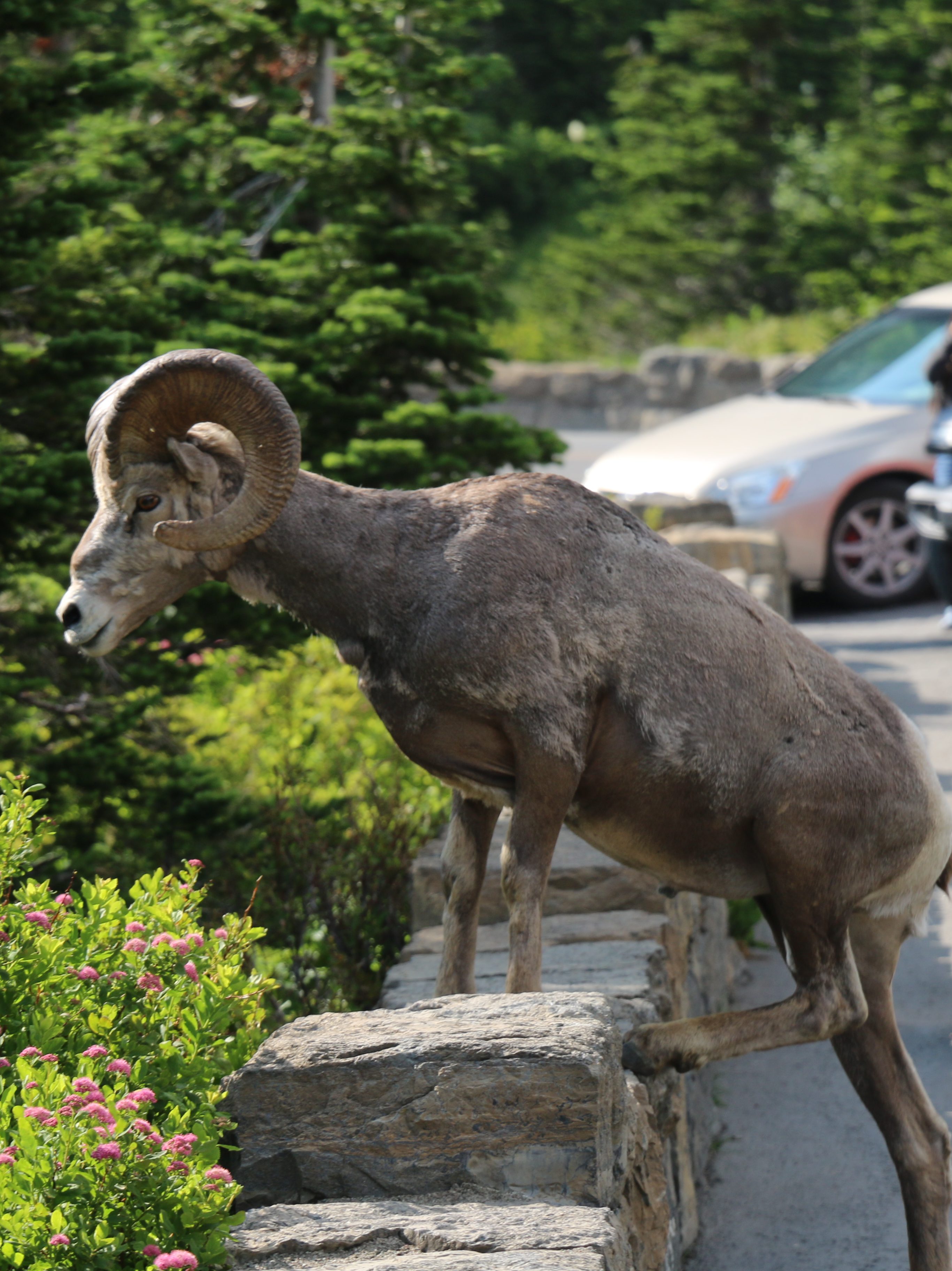
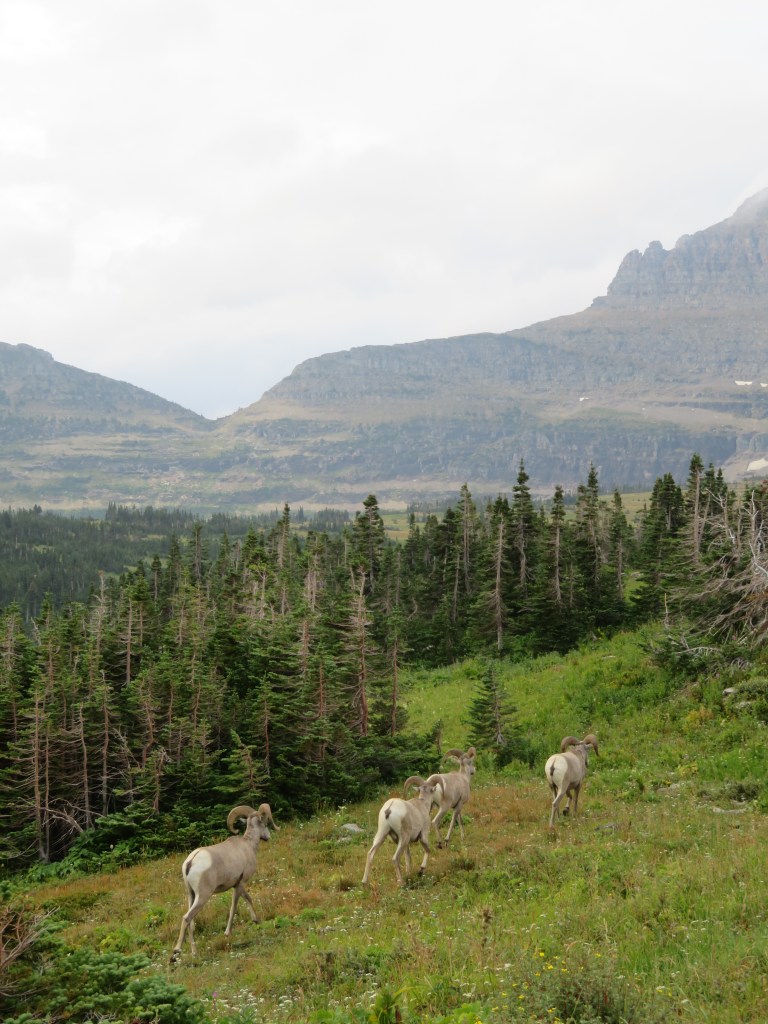
Left: Bighorn sheep at Jackson Glacier Overlook parking area courtesy of Aaron Wilkinson @the_big_lifestyle on Instagram. Right: Herd of bighorn sheep at Logan Pass.
Bighorn Sheep were as common at Many Glacier Hotel as deer in my backyard in Wisconsin. In May and early June, before the property was bustling with tourists, bighorn sheep would hang around the hotel all day long. They might stand right outside the windows of the Ptarmigan Dining Room while guests ate lunch. However, as the high-season crowds push bighorn sheep deeper into the park, you have to put in a little more effort to see them. Bighorn sheep are typically found at higher elevations than bears and moose. They often roam around Logan Pass, the highest point on the Going-to-the-Sun-Road. Any of the hiking trails at Logan Pass could lead to bighorn sheep.
Mountain Goats


Left: Two mountain goats on Highline Trail. Right: Mountain goat on Mount Oberlin climbing route.
Mountain Goats are the animal I see least often on this list because they are only found at the highest elevations of the park. Hidden Lake Overlook at Logan Pass is the most popular trail for mountain goat sightings. Also at Logan Pass, I have taken a few sunset hikes to Haystack Butte on the Highline, and I encountered mountain goats on the trail every time. (That might sound cool in theory, but it was actually quite stressful to be trapped between a mountain goat and a cliff as darkness encroaches.) Though not as exciting as an up-close encounter, a reliable way to spot mountain goats is by scanning the snowy hillsides with a pair of binoculars.
 Latitudes with Lucy